Showing posts with label Asakusa. Show all posts

Sunday, June 12, 2011

被官神社のお守り A Charm from Hikan Shrine


If you Google "Hikan Shrine," you won't get much. It doesn't have Facebook or Wikipedia pages, but... None of that matters to this fearless collector! Maybe off the beaten path omamori will be my specialty!

Ah, but the the truth is, this is another from the Tokyo series. Hikan Shrine is in Asakusa right beside Sensoji. This Hikan Shrine omamori has a bit of an identity crisis. This is how I understand the situation. Asakusa Shrine is an umbrella name for Hikan and several other smaller shrines in the vicinity. Hikan Shrine is actually tiny. I doubt you could buy an omamori at the shrine's exact location. This one was purchased at the main shrine building, that is, the biggest shrine building. I chose this omamori because it was cute.

Legend has it that Hikan Shrine was built by some fire-fighting families during the Edo period.

I was with a group visiting Sensoji, and I came upon this shrine hoping to escape from the rain. There was a cat sitting under the omamori area, and I got to pet it for a while as I crouched under the table from the rain. I'm sure I looked strange. When the summer rain became drizzle, I knocked on the sales' window and picked this omamori up because of its looks. It's very cute, isn't it?

Hikan Shrine was a nice escape from the bustle of the more touristy Sensoji, and I'll always remember that slightly battered but perfectly friendly temple cat.

The website for Hikan Shrine and the Asakusa Shrine complex is right here.

浅草寺のお守り A Charm from Sensoji


When I come to major shrines and temples in my collection, like Todaiji or Kinkakuji, I get worn out before I even start writing. Sensoji is one of those temples that makes me wonder where I'm supposed to start.

A quick overview. Sensoji is Tokyo's oldest temple, founded in 628/645. Legend has it that some fisherman pulled an ancient Kannon statue from the waters and built the temple to house it. Tokugawa Ieyasu contributed to the temple's expansion during the seventeenth century. Kannon is widely worshipped in Japan as the boddhisatva of mercy. Sensoji has multiple buildings, including a five story pagoda. Nearby is Hikan Shrine. Leading up to the temple entrance is a shopping arcade where you can get any kind of Japanese knick knack you'd want, but the area is famous for its bean cakes. Be sure to get them fresh if you visit.

Sensoji is also famous for its massive, black lantern hanging on the gate in front of the temple. Even though it was raining when I visited, my ground insisted on getting our picture taken in front of it. Sensoji is immortalized in Hiroshige's beautiful wood block print of the temple, which features the lantern at the front and the temple in the back. This is nice example of Japanese artists blending Western perspective with Japanese subjects.


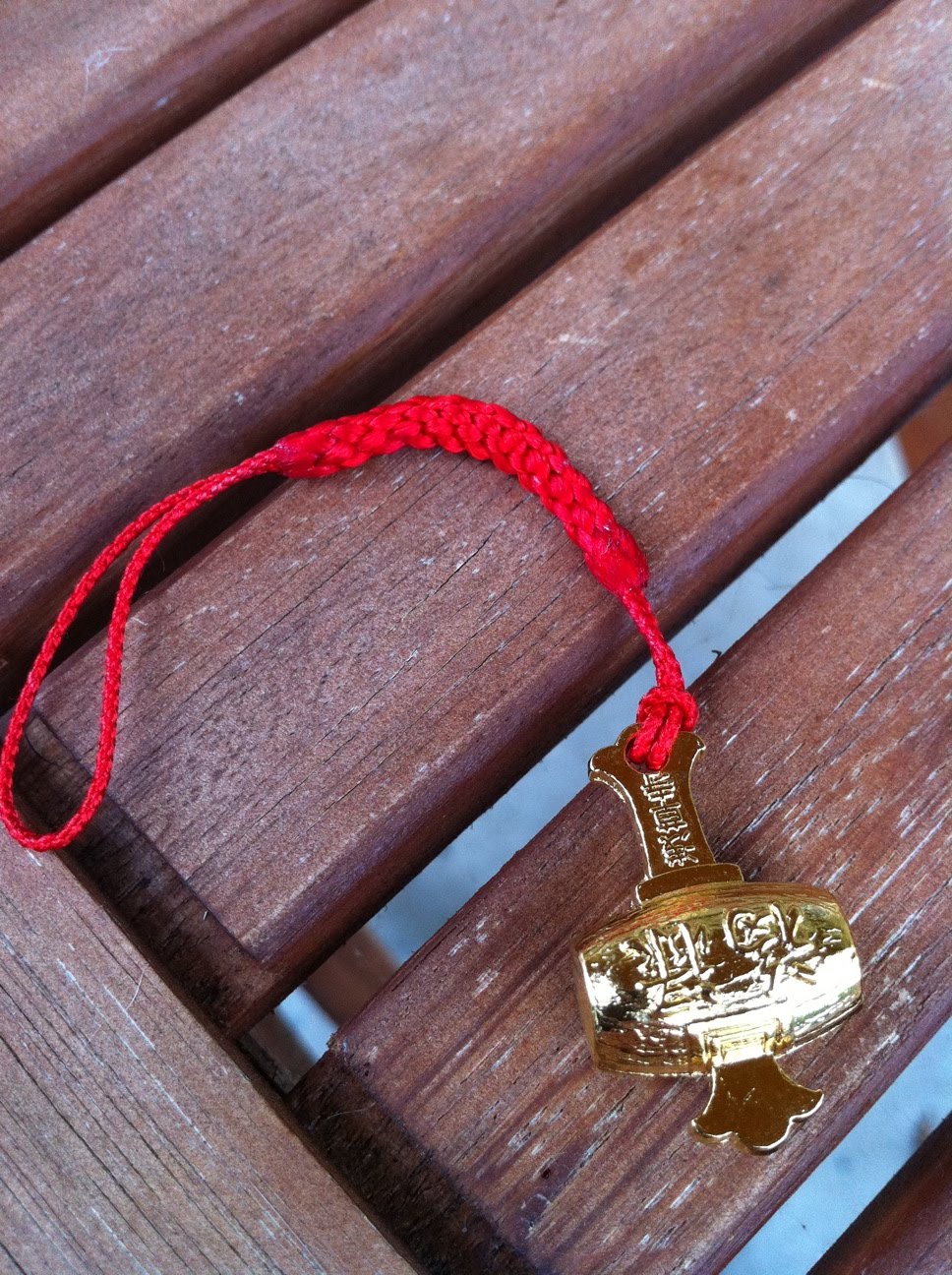
I chose this omamori because of its interesting, hammer-like shape. But I don't remember there being much of a selection outside the traditional style. Either way, the hammer has Sensoji's crest and name, a touch that lets me know I can only get this form there.